By: Ann K. Avery, MD, Infectious Disease Physician at MetroHealth Medical Center
If you've ever looked at a lab result and immediately wondered, “What does this number mean?”—you're not alone.
Adulthood comes with report cards, after all. They’re called lab results, and they’re here to help us learn more about our health. For people with HIV, there are some particularly important lab results we think about: CD4 count and viral load.
Your CD4 count and viral load give your medical team plenty of important information. They’re incredibly helpful tools, and it’s critical to get them checked at least twice a year.
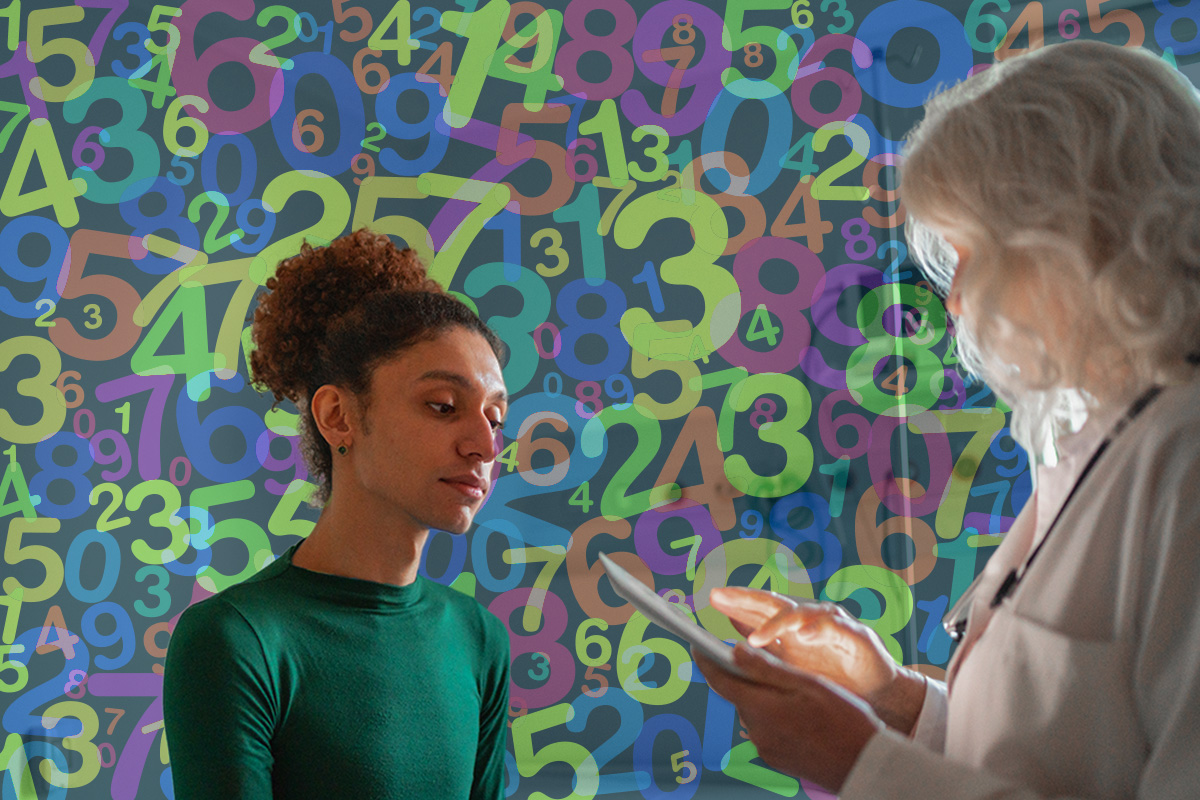
In the big picture, lab result numbers can become something we worry about, celebrate, or remember. They indicate important moments and can tell a story about who you are. They also are just, well… numbers. They tell part of the story, but they’re only one part of you.
When a number starts to mean something more
CD4 count and viral load are measurements. That's what they're designed to be: information that helps you and your healthcare provider understand what's happening with your health.
But we're human. We don't always leave this stuff at the doctor's office. We can easily get wrapped up in numbers—humans are competitive, after all. We compare today's number to last year's.
Now, this practice isn’t necessarily a bad thing! It’s great to be actively working towards becoming undetectable (remember, U=U) or building up your immune system if your T-cell count has dropped.
Labs are the best way to monitor this process.
How numbers become part of our story
When you live with HIV for a while, you can get surprisingly familiar with your lab result numbers. You may remember your CD4 count from when you were first diagnosed. You may remember the first time you heard the word undetectable. You may even remember a particular lab result because of what was happening in your life at the time.
When you think about it, remembering specific lab results is something relatable to people who have HIV. But most of us didn't grow up dreaming of the day we'd have a favorite lab result. That’s the interesting part.
A low CD4 count may remind you of a difficult period. An undetectable viral load signals a moment of relief. Further along, seeing a number change may bring back the uncertainty you felt early in your diagnosis.
The number itself hasn't changed. It's still a measurement.
But the story we attach to it CAN change.
We attach meaning to all kinds of things: dates, places, songs, photographs, even the smell of someone's house. So why wouldn't we do the same with a number that once made us very happy, very scared, or very relieved?
When “good numbers” don't tell the whole story
Here's another funny thing about numbers: we tend to think they can answer questions they were never designed to answer.
If your viral load is undetectable or your CD4 count is in the normal range, there's plenty of reason to feel good about that.
But even a great lab result can't tell how you slept last night. It can't tell you're lonely. It can't tell if you're worried about telling someone you're living with HIV. It can't measure stress, how connected you feel to other people, or whether you're having one of those weeks when everything seems harder than it should.
There is no lab test for “How am I actually doing?”
A person can have reassuring numbers and still be struggling emotionally. Someone can feel healthy and strong while carrying complicated emotions about their health. A lab result that isn't what you hoped for doesn’t mean you’ve failed.
Good numbers matter. They just aren't the whole picture.
Results are not a verdict
So, what do we do with all these numbers?
First, we don't have to stop caring about them. They give you and your doctor useful information and guide your care.
It helps to remember what they are: information, not a verdict.
We're used to treating numbers like grades. An “A” is good. A lower number is bad. And somewhere along the way, we can start feeling as though we're the student being graded.
But there is no gold star for having the perfect lab result. Your doctor isn’t going to get you in trouble if your labs “need improvement.” And thankfully, there is no parent-teacher conference scheduled for this Thursday.
Lab results provide a snapshot of your health at a single point in time. They give you information about what's happening at a particular moment. It’s possible to pay attention to them without judging yourself.
Instead of asking, “What does this number say about me?” it may help to ask, “What is this number telling me about my health?”
That's a small shift, but it can create some important space between your health information and your identity. You are a person, not a number.
You are more than your lab results
The funny thing about being human is that we can turn almost anything into a scorecard. We count steps. Calories. Hours of sleep. Years. Miles. Likes. Followers. Money in the bank. Numbers give us the comforting illusion that everything can be measured, compared, and neatly sorted into good and bad.
But life doesn't work that way.
There will always be another test. Another appointment. Another blood draw. Another set of numbers to look at. That's a very important part of taking care of your health. But a lab result doesn't know what a good friend you are. It doesn't know what you've overcome, what makes you laugh, and how fabulous you look.
At the end of the day, your numbers are only part of your story. They are not the whole story.